
Previously
Rudolfinum
October 22
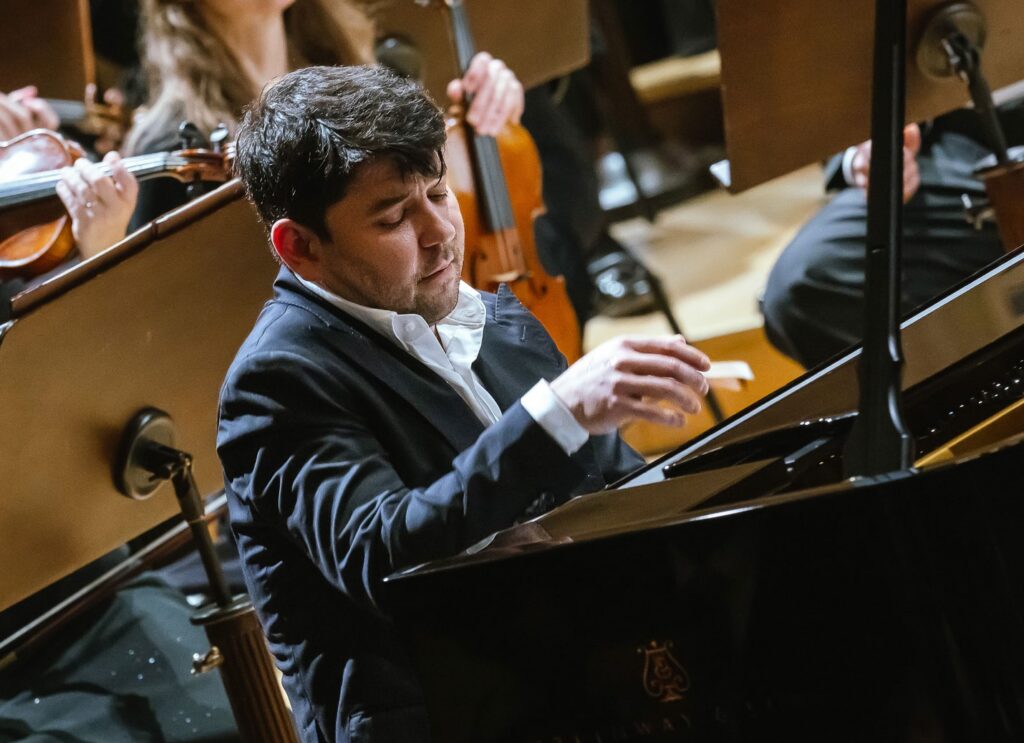
A magician at the keyboard (Photo by Petra Hajská)
Soloists come and soloists go, usually too quickly to form any permanent attachment to an orchestra. There’s a noticeable difference when Uzbek pianist Behzod Abduraimov plays with the Czech Philharmonic. His first appearance with the orchestra was in 2014, and he has performed with them nearly 20 times since, including last week’s concerts. The bond they have formed was clear in a dazzling rendition of Rachmaninoff’s Piano Concerto No. 3.
The symbiosis is partly due to the relationship that Abduraimov has with conductor Semyon Bychkov. They do intensive preparation before a performance that goes beyond normal rehearsals. In an interview with Bachtrack, Abduraimov recalled their work on Rachmaninoff’s Rhapsody on a Theme of Paganini in his last appearance with the orchestra. “Maestro Bychkov sat down with me and we went through the piece bar by bar,” he said. “He was very specific, giving me suggestions that I was happy to get. After all that I felt very comfortable when I got onstage, able to relax and be in the moment and just let it go.”
That’s certainly how the piano concerto sounded, with both soloist and orchestra easing into a measured opening that quickly blossomed into blazing runs by Abduraimov on the keyboard anda lush, warm surge from the orchestra. Throughout, Bychkov balanced the romantic swells in the music with light, at times even understated accompaniment that gave Abduraimov plenty of room for virtuoso solo turns. Steady pacing added to the relaxed feel of what is normally a weighty piece.
Stylistically, Abduraimov is a magician. He has a workmanlike approach to playing, with no flash or flamboyance, yet what comes out is inspired. He can execute finger-breaking runs with cool proficiency, or set them on fire, or give them grand dimensions – or change character entirely, treating cadenzas with exquisite sensitivity. Above all he shows an almost intuitive command of the material, a level of mastery that is true to every single note in the score while giving the music spontaneity and a voice that is distinctly his own.
For all that, what was most impressive in this performance was the fit between soloist and orchestra. Though to be perfectly accurate, there was no fit at all, just a captivating flow of a single unified sound. When the piece turned dark, both the orchestra and piano took on somber tones. When accompaniment was reduced to colorful woodwinds, Abduraimov played with a light, liquid touch. They mirrored each other throughout, an achievement even more remarkable given that Bychkov and Abduraimov barely looked at each other.
It’s a unique collaboration that audiences abroad will get to experience in coming weeks, as Abduraimov goes on tour with the orchestra to Belgium, France and Spain – adding new chapters to their history and depth to the bond they share.
The concerto was the centerpiece of a program that began with a suite from Smetana’s Bartered Bride. It was a tasty aperitif, brisk and lively with engaging rhythms. The Overture featured a lot of percussive punch, the Furiant a rich, full sound and the Dance of the Comedians a blast of circus brass that segued neatly to cool trumpets and a taut, exciting conclusion. Though brief, the suite encapsulated the current Czech Philharmonic sound, with a base of natural native warmth from the players and Bychkov providing a worldly finish.
The finale offered another side of Rachmaninoff. His Symphonic Dances are a joyride, a pleasant excursion through dreamy melodies, clever quotes and, near the end, what could almost be a rockin’ rhythm. Working without a score, Bychkov resisted the temptation to run fast and wild with the piece. Instead, he set a moderate tempo that let the music breathe and allowed the orchestra to show its versatility with gliding woodwinds, stentorian brass and glimmering strings. The dances had a light-hearted quality under his baton, and derived a lot of character from his phrasing, pauses and energetic approach. The final movement has references to death and resurrection, but Bychkov gave it a breezy feel, crafting a hard-charging frolic that ended with a percussive flourish.
Apparently conductors can have special relationships with composers as well.